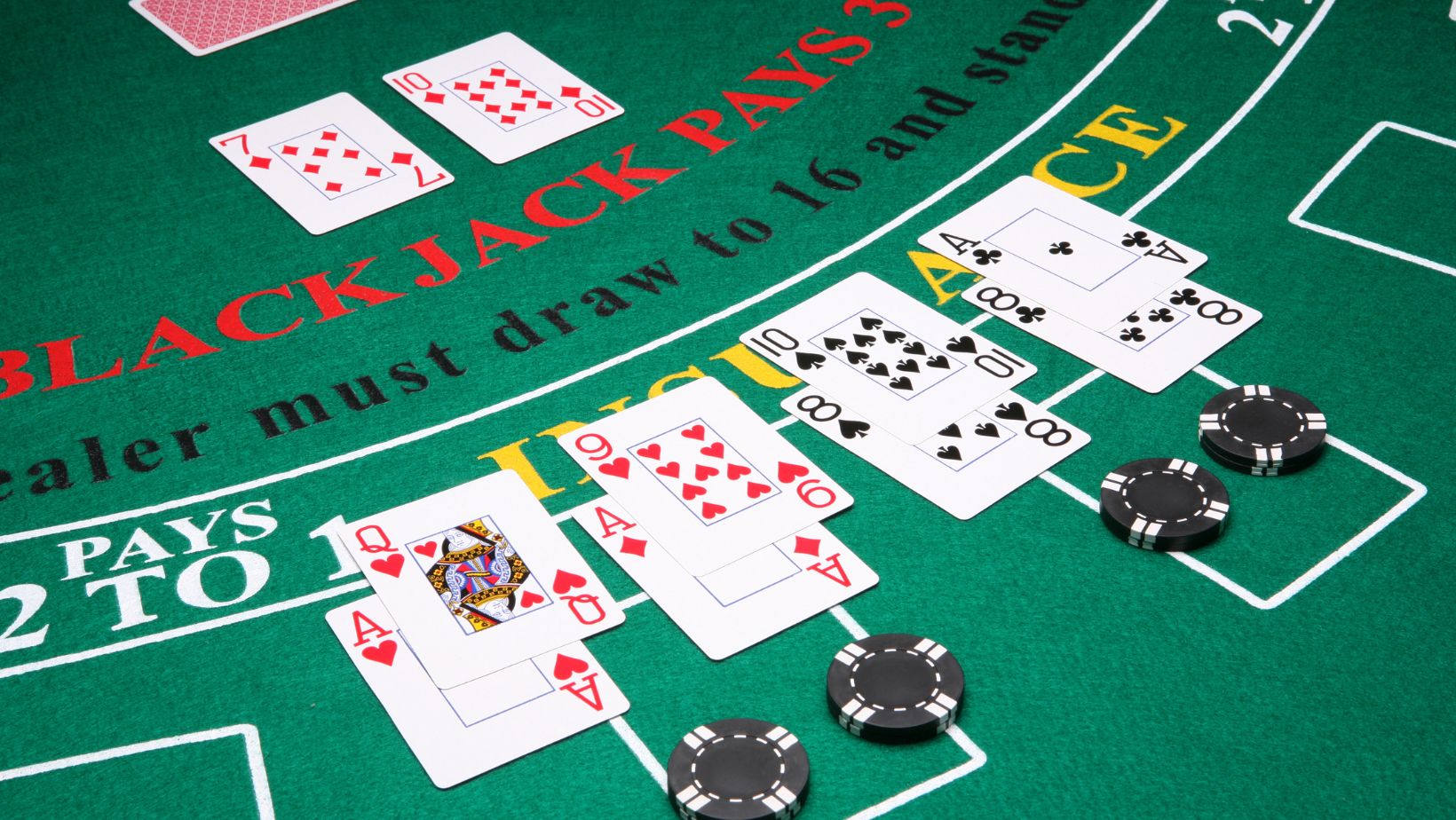
Blackjack remains one of the few casino games where player decisions directly affect the outcome. Unlike slot machines or roulette, the game depends on mathematical skills and strategic knowledge. Card counting is a technique that allows players to reduce the house advantage by tracking cards already played. This method has become central to how serious players approach the game.
What Card Counting Actually Is and How It Works
Unibet UK and other casinos understand that card counting involves monitoring which cards have been dealt to estimate the remaining deck composition. The technique relies on one fundamental principle: keeping track of high cards and low cards provides information about future hands. When high cards (10, Jack, Queen, King, Ace) remain in the deck, the player has a statistical advantage. When low cards dominate, the house edge surges.
Card counting is not cheating. Players use only information from visible cards and mental calculations. They do not use devices or modify the deck. The method differs from memorization because it tracks numerical patterns instead of individual cards. Most counting systems assign numerical values to cards and maintain a running total. This running count then converts into a true count that accounts for how many decks remain.
The High-Low Counting System Explained
The High-Low system is the most popular counting method among recreational and professional players. It assigns values as follows:
- Cards 2 through 6 equal plus one (+1)
- Cards 7, 8, 9 equal zero (0)
- Cards 10 through Ace equal minus one (-1)
Players add or subtract values as cards appear during play. A running count above zero suggests more high cards remain, which favors the player. The High-Low system balances simplicity with effectiveness. New players can learn it within days, while advanced players use it to maintain focus on other strategic elements.
Converting Running Count to True Count and Adjusting Bets
Running count and true count serve different purposes in card counting strategy. The running count totals all card values seen, but it does not account for deck penetration. True count takes deck penetration into consideration by dividing the running count by estimated remaining decks.

Here is how true count conversion works in practice:
| Running Count | Remaining Decks | True Count | Betting Decision |
| +8 | 4 decks | +2 | Increase bet moderately |
| +12 | 3 decks | +4 | Increase bet significantly |
| +10 | 5 decks | +2 | Increase bet moderately |
| -5 | 2 decks | -2.5 | Decrease bet to minimum |
Betting adjustments rely on true count values. When the true count rises above zero, players surge bets because the player advantage explodes. A true count of plus two or higher signals favorable conditions. Conversely, negative true counts indicate the house has regained its edge, so players reduce bets to minimum amounts. This betting strategy cuts losses during negative penetration periods and maximizes winnings when conditions favor the player.
Deck Penetration and Its Strategic Impact
Deck penetration measures how many cards the casino deals before reshuffling. Higher penetration means more cards pop into play, giving counters more information. Casinos that deal 70 percent of the shoe before reshuffling pack better counting opportunities than casinos that reshuffle at 50 percent penetration.
The relationship between penetration and profitability appears in this overview:
- 50 percent penetration – Counter advantage minimal, mostly neutral conditions
- 60 percent penetration – Counter gains slight mathematical advantage
- 70 percent penetration – Counter advantage becomes meaningful and measurable
- 75-80 percent penetration – Counter hits maximum advantage in most scenarios
Players should select tables with deep penetration. Casinos increasingly use automatic shuffle machines to crash penetration, making it harder for counters to surge an edge. This casino countermeasure directly addresses the counting threat.
Casino Detection and Countermeasures Against Card Counters
Casinos employ multiple strategies to identify and exclude card counters. Surveillance teams watch betting patterns for sudden bursts that coincide with favorable counts. Dealers track consistent chip management and lack of emotional reactions. The most obvious sign of counting crashes when a player bets small amounts during negative counts and large amounts during positive counts.
Common casino defenses include using multiple decks, reducing penetration, employing continuous shuffle machines, and banning identified counters. These measures do not stop the technique, but they crash its profitability. Advanced casino practices involve training dealers to shuffle frequently and using facial recognition software to identify known advantage players.
Advanced Counting Systems Beyond High-Low
Players seeking additional advantages may learn advanced systems like the Zen Count, Omega II, or Red Seven system. These systems assign different point values to cards and produce more precise counts than High-Low. The Omega II system, for example, treats deuces as plus one and aces as minus one, versus treating them neutrally in High-Low.
Advanced systems require more practice and mental effort. The advantage gained rarely justifies the increased complexity for casual players. Most professional counters stick with High-Low because its simplicity allows focus on bet sizing and play strategy simultaneously.
Bankroll Management and Long-Term Profitability
Card counting success depends as much on bankroll management as counting skill. A player with limited funds can face ruin even with a theoretical advantage. Variance and short-term losing streaks cascade despite favorable conditions. Professional counters maintain large bankrolls relative to their bet sizes to survive these fluctuations.
Key bankroll considerations for card counters include proper bet spread ratios, session length planning, and maintaining an emergency reserve. Bet spread refers to the ratio between minimum and maximum bets. A 1 to 4 spread means the highest bet zaps four times the minimum. This ratio balances aggression with risk management. Sessions should last until either reaching profit goals or hitting predetermined stop-loss amounts.
Legal Status and Casino Policies
Card counting is legal in most jurisdictions. Casinos cannot arrest players for counting because it violates no laws. However, casinos hold the right to refuse service and ban players. Many counters face exclusion from casino properties. This creates a frenzy of adaptation where successful counters disguise their activity, change appearances, or use team techniques to continue playing.
Understanding the legal and practical environment helps counters operate sustainably. The technique remains viable, but requires discipline, skill development, and acceptance of casino countermeasures.
Card counting transforms blackjack from pure chance into a skill-based game. Players who master this technique gain measurable advantages over time.