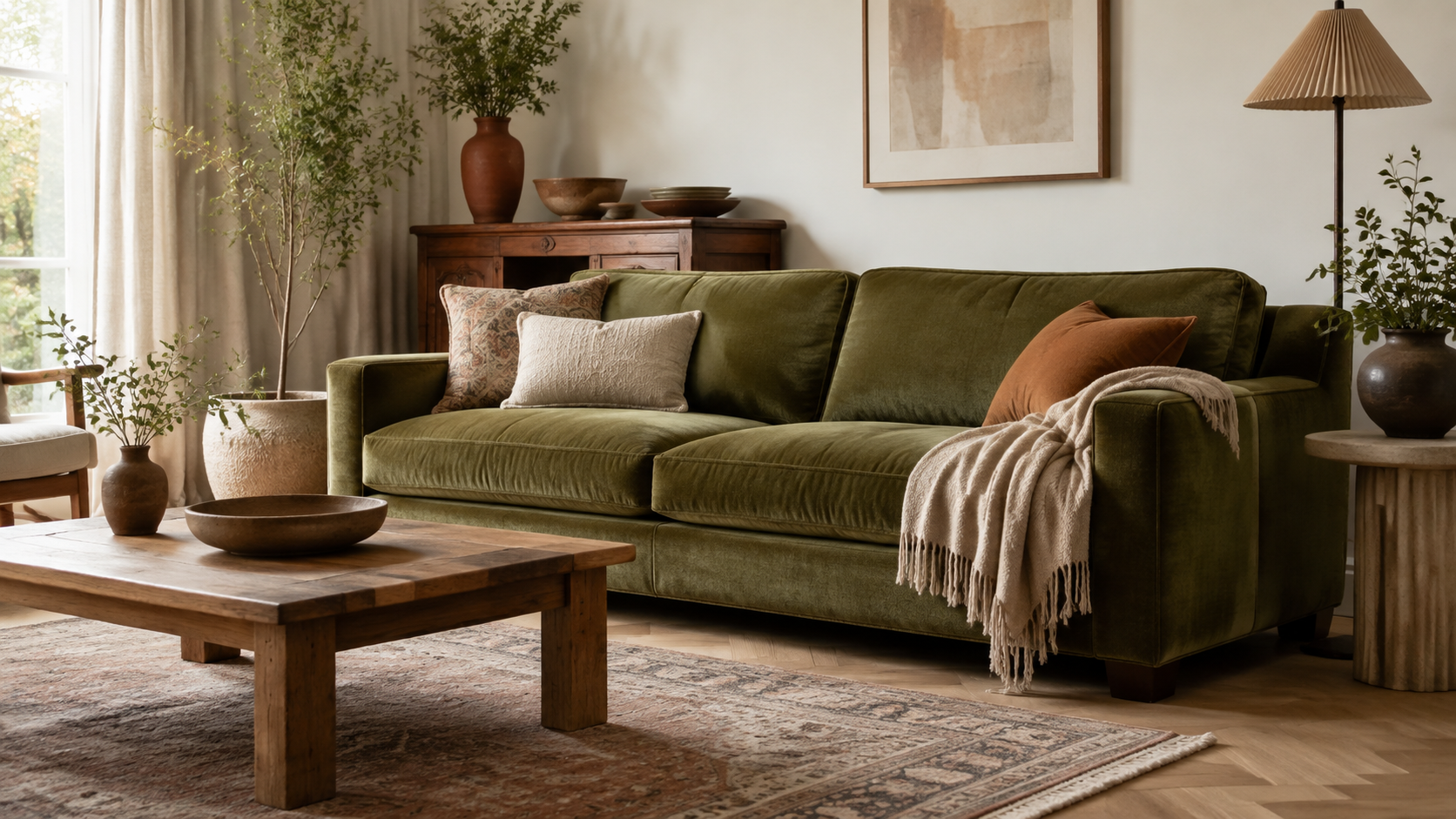
A green sofa can refresh a living room, but homeowners often assume the walls, rug, and art must all change around it. In many rooms, a few controlled color links are enough.
The first decision is not simply light or dark green. Undertone and intensity determine which existing neutrals, woods, metals, and textiles will feel connected rather than accidental.
A collection of green sofas and couches demonstrates the range from sage and olive to emerald and forest. It also shows why green works as a focal point with neutral rugs, wood tables, and modern media walls instead of requiring a fully color-matched room.
Table of Contents
ToggleIdentify the Green Undertone
Place a fabric sample beside the wall in daylight. Some greens lean yellow and feel earthy, while others lean blue and appear cooler. Gray-green shades can read almost neutral from a distance.
Compare the sample with the room at night because bulbs can shift the balance. Take photographs only as secondary references. The eye in the actual room is the better judge of how wall and upholstery interact.
Keep the Existing Walls When They Cooperate
Warm white, cream, beige, soft gray, and many muted colors can support green. The wall does not need to repeat the sofa; it needs an undertone that does not make the fabric look muddy or harsh.
If the wall and sofa compete, try a textile or artwork between them before repainting. A rug that contains both undertones can create a bridge. Curtains can soften the boundary on a large wall.
Repeat Green in Small Amounts
Use two or three modest references elsewhere, such as one artwork detail, a ceramic object, or a patterned cushion. The repetitions should be smaller and less saturated than the sofa.
Avoid matching every green exactly. Related shades create depth, while identical accessories can feel packaged. Keep some distance between repeats so the eye moves around the room.
Choose Wood by Mood
Walnut and other warm woods pair naturally with olive, forest, and many sage tones. Pale oak can make a soft green room feel light, while darker wood gives emerald upholstery more visual weight.
Use the wood already present as the starting point. A new coffee table does not need to match the media console perfectly, but their undertones should feel related. Repeat one wood tone more than once for continuity.
Use Black as a Small Frame
Black lamp bases, narrow picture frames, or table legs can outline a green focal point and connect it with a television screen. A little black adds definition without making the palette severe.
Keep dark elements slim when the sofa is already deep forest or emerald. Large black storage beside a dark sofa can create one heavy block. Leave lighter wall or floor area between them.
Select a Rug That Grounds Rather Than Competes
A plain textured rug in cream, oatmeal, or gray lets the sofa lead. A patterned rug can work when its design includes muted green or the room’s existing neutral without repeating the sofa at full intensity.
Size matters more than pattern detail. The rug should connect the seating pieces, usually reaching under their front areas. A small floating rug can make the colored sofa look isolated.
Add Warm and Cool Metals Deliberately
Brass and bronze can warm olive and emerald, while blackened steel gives a sharper modern edge. Nickel and chrome can support cooler blue-green shades.
Choose one main metal and allow a second only in small amounts. Mixing every finish creates distraction around an already noticeable sofa. Existing door hardware does not need to dictate every lamp, but repeated nearby pieces should relate.
Control Pattern Scale
A solid green sofa can handle patterned pillows, but one large-scale motif often feels calmer than several small unrelated prints. Combine pattern with plain texture to preserve breathing room.
Use colors already present in the walls, rug, or wood. If a pillow introduces three new hues, it may create a second palette. Remove one accessory before deciding the sofa itself is hard to style.
Plan for Natural Light
Strong sun can change how color appears and may affect upholstery over time. Follow the product care guidance for placement and use window treatments where direct exposure is a concern.
Observe shadows across the proposed sofa location. Velvet and chenille can show light and pile direction differently from flat fabric. That variation may be part of the appeal, but it should be seen before purchase.
Balance the Sofa With Plants
Plants can connect with green upholstery, yet a large cluster behind the sofa may blur the silhouette. Choose leaf shapes and containers that provide contrast.
One taller plant near an end can be enough. Keep moisture, soil, and leaves away from the fabric, and place a stable saucer beneath containers. Artificial greenery also benefits from restraint.
Edit Existing Accessories First
Before buying new decor, remove half the items near the sofa and rebuild the arrangement slowly. The green surface already contributes more color than a neutral sofa did.
Bring back objects that connect through material, shape, or use. An existing wood bowl or black lamp may support the new palette better than a set of newly purchased green accessories.
Finish With a Three-Point Check
Stand at the entrance, sit in the main seat, and view the room from the adjoining area. At each point, look for one green focal area, one repeated neutral, and enough open space around the sofa.
Keep the walls if they support that balance. A green sofa feels integrated when undertones, scale, and small repetitions connect it to the room, not when every surface has been redesigned to announce the same color.
Adapt the Palette Across Seasons
Green can stay constant while smaller textiles change. Cream and pale natural fibers can lighten the room in warmer months, while rust, ochre, or deeper brown can add warmth when days become darker.
Store alternate cushion covers rather than layering every seasonal color at once. Change one textile group, then reassess the room in its current light. The sofa remains the anchor while the supporting palette responds to the season.
Keep Maintenance in the Styling Plan
Leave enough space to vacuum around the sofa and access every cushion. A tightly packed arrangement can make a beautiful color harder to maintain.
Choose throws and pillows whose care routines fit the upholstery rather than shedding lint or transferring dye. Styling succeeds over time when every layer can be cleaned, moved, and returned without hiding the green surface completely.